
Evolve Stage 2

Evolve Stage 2

Not enough ratings
Hunt Fundamentals Guide - Evolve Legacy
By Bot
Want to become a decent Evolve player quickly? Learn the fundamental mechanics of hunt first! Specifically, this guide will walk you though movement paths, tracking methods and dome types and terminology.
2
2
   
Award
Favorite
Favorited
Unfavorite
Introduction
Welcome to the Hunt Fundamentals Guide.

[NOTE: This guide is currently being reviewed by community members, which means that the contents of this guide is therefore subject to change]

What this guide aims to do:
  • Give you a thorough understanding of how to play the "Hunt" game mode in Evolve Legacy.
  • Give you a solid understanding of the terminology used by the community. (And some "new" terminology that I personally use for concepts that have yet to receive a community-wide name).
What this guide won't be looking at:
  • Hunter compositions.
  • Hunter/Monster specific tactics and strategies.
  • Individual map analysis. (Trapper center paths, monster feeding routes, map area names, and general map analysis will be in another guide)
  • Evolve Stage 2 hunt. (Although most of the things in this guide applies to Evolve stage 2 as well)

Note: It's my experience that few if any people play with Elite Wildlife enabled these days, which is why they are not mentioned in this guide.

Who is the guide for?

  • Monsters
  • Hunters
  • New Players

While this guide is for both Monster and Hunter players, it might at times feel like it's only giving hunter relevant information, but I guarantee that understanding all of these concepts as a monster player it will help you just as much in making informed decisions as you play, as it would a hunter.
Monster and Hunter pathing
SIMPLIFYING THE MAP

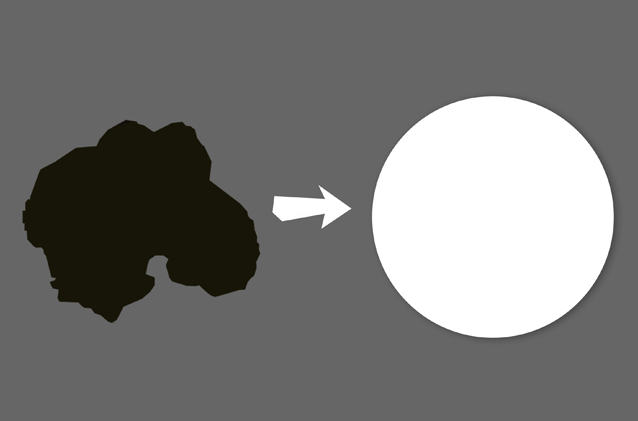
When you are starting out, and whether you are a monster or a hunter, it can be pretty difficult to figure out just where you need to be and where to go. The fact that the maps look fairly complex doesn't help the matter. Luckily, all hunt movement paths follow the same principles, and can be simplified in order for us to better understand them.


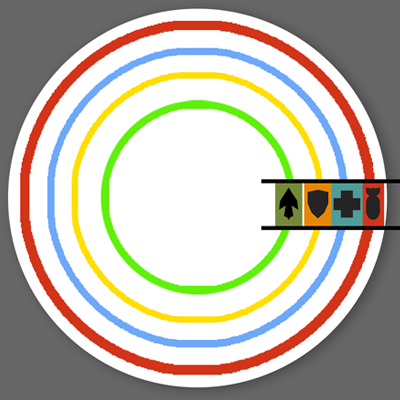
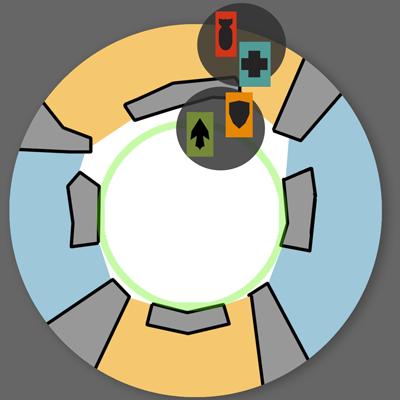
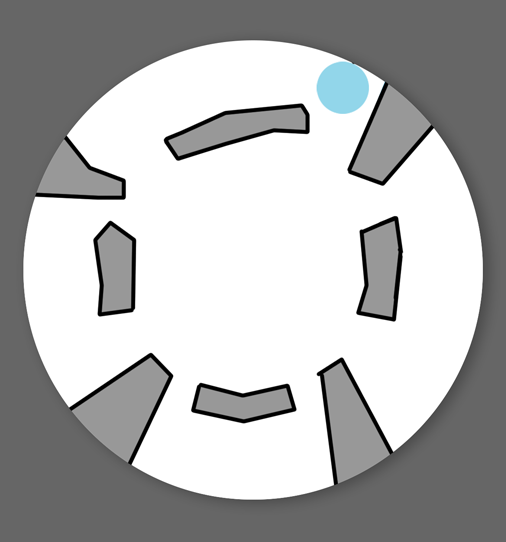
First we just need to think of any map as a circular arena.

MONSTER AND TRAPPER MOVEMENT


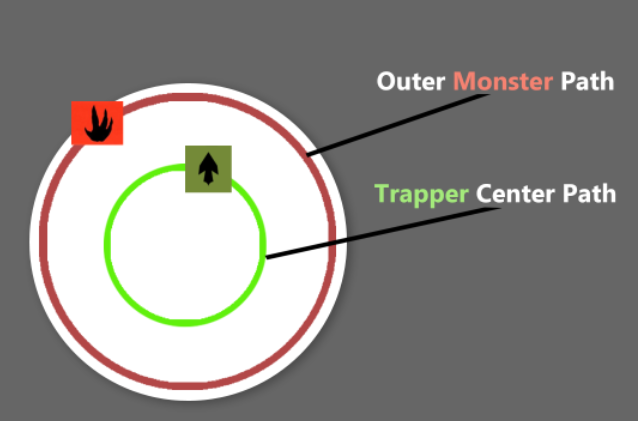
Now that we have simplified the map, we're able to simplify the movement path of the Monster and trapper.

You can see these paths marked on the image above. The reason why the monster generally move along these path is due to the following:

The Monster will generally move alongside the edge of the map because:
  • It helps the monster block LoS (Line of sight) to the hunters.
  • There are generally more food in these areas.
  • There are generally always hunters close to the center of the map.

The Trapper will generally move alongside the center path due to the following reasons:
  • Monsters move faster than hunters (even if they have the movement speed perk). By moving along the center path, the trapper is able to cover less ground which gives him the ability to more easily intersect the monster as it moves closer to the center path.
  • Should the monster try and cut through the center of the map, the trapper is also in a better position to intersect and dome the monster.

CUT, DON'T CHASE


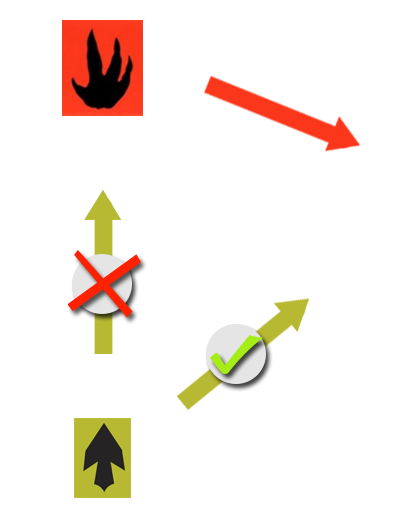
One of the most common rookie hunter mistakes is to chase the monster. As mentioned above, the monster is faster than you, so unless the monster decides to backtrack, then you're unlikely to catch up to it. Instead, try and predict its movement and intersect its path.

The only hunter that is exempt from the chase rule is the Assault, but we'll get back to that later on.

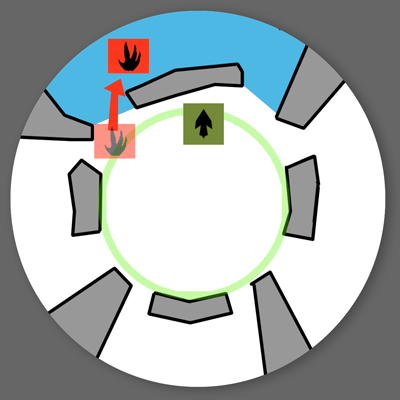
POCKETS AND EXIT POINTS


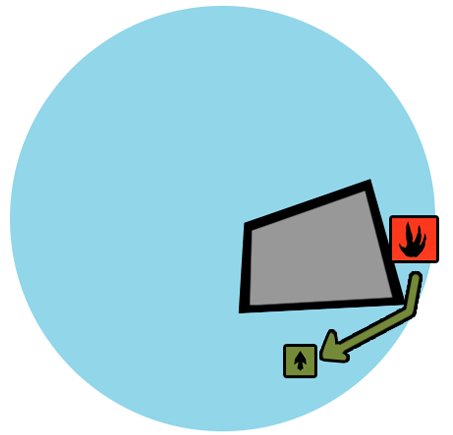
Of course, the map isn't completely devoid of obstacles. On the image above, large chunks of impassable terrain has been added.


Often these large impassable objects in the game will create pocket areas that give the monster a limited amount of exit points.
Most exit points will also force the monster to move onto or near the trapper's center path where it can easily be trapped in a dome.

But how will you know which exit point the monster will take if you're not able to make LoS to the monster at most times as the trapper? and what if it tries to camp inside a pocket area?

Hunting is a team effort!


Thankfully, the Trapper isn't alone. That's right, hunting is a team effort! Who would have thought? Despite this, a misconception that people often have, is that the trapper is the one responsible for finding the monster. However, a vast majority of the time the trapper won't be in a postion to spot the monster until it's too late. Therefore, the trapper needs the rest of the team to find the monster and point out its movement so that he/she(the trapper) can intersect the monster at the exit points.


The Assault in particular plays a large role in pushing the monster towards the exit point and towards the trapper.

In general, once the Assault has established LoS with the monster, the Assault should:
  • Keep pinging the monster, to give the team updated information about the monster's location.
  • Stop the monster from feeding.
  • Flush out camping monsters and try to push them towards an exit point.

Additionally, because the Assault will be one of the few members that will be actively chasing after the monster instead of intersecting its path, it's recommended that the assault sticks to the monster's tracks in order to prevent it from backtracking unnoticed.


Because the Assault will be chasing after the Monster's tracks, he will often be the hunter who has to cover the greatest distance, which is why the Movement Speed Perk is almost a mandatory perk for the Assault player.

THE HUNTER CHAIN


Now that we know that trapper will mostly be running along the center path and that the assault will often be moving around outer path with the monster, what about the support and medic?

Well, while they don't have a particular path that they follow, it's often a good idea that they stick to the hunter chain.

The hunter chain essentially just describes where the hunters should be positioned in relation to one another.

1) Trapper, 2) Support, 3) Medic, 4) Assault.

In other words, support should always be in front of the trapper, the medic should be in front of the support and the assault should be in front of the medic.

The reason we order the chain in this order is because:

  • 1) The trapper needs to stick around near the center path for reasons we've already covered.
  • 2) Support is able to cloak and help out the trapper once the rest of the team reach the dome.
  • 3) Medic is wedged between support and Assault as to disperse available healing as best as possible. Likewise, Support and Assault is positioned near the Medic in case the Medic needs protection.
  • 4) Allows the Assault to put pressure on the monster pretty much anywhere on the map.

Chain coherency doesn't matter that much when you're running close together, but once you start spreading out a bit, try and keep chain coherency. Even when your team has to split up can it be beneficial to keep chain coherency as much as possible.

SPLITS

Sometimes you will get into situations where you can't keep line of seight with each other. At these times, your team might have to split up.

2 by 2 split.


A spretty standard split that consist of Trapper + Support and Medic + Assault.
+ This split ensures that no one is ever caught by the monster alone.
+ Allows for stealth domes (See Domes)
- Two hunters are still relatively easy for a monster to take on. Therefore, be careful of 2 by 2 splits if you can see it will put a significant distance between the two groups.

3 by 1 split

+Puts significant pressure on the monster.
- Leaves the Trapper extremely vulnerable. Trappers like Maggie and Abe fair better in these splits as their CC can help them keep the monster at a distance while the rest of the team comes to your aid.
Finding the monster without trapper tools
As mentioned earlier, tracking down the monster is a team effort, and while all trappers are equipped to support the team in this endeavour, it's important to understand that a monster can be tracked down even without these trapper tools. The following section will dive into what things you should pay attention to while you track down the monster.

YOUR TEAM

Pings
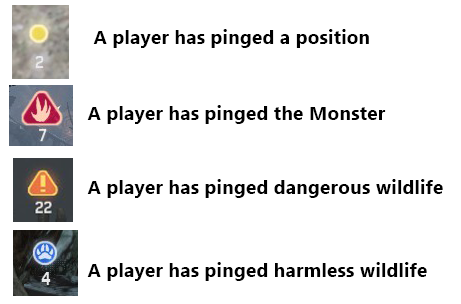
Press "Q" to ping a location. A yellow marker will appear with a number that tells everyone how far away it is. This ping icon will appear in world-space but it will also show on your map.

THE MAP

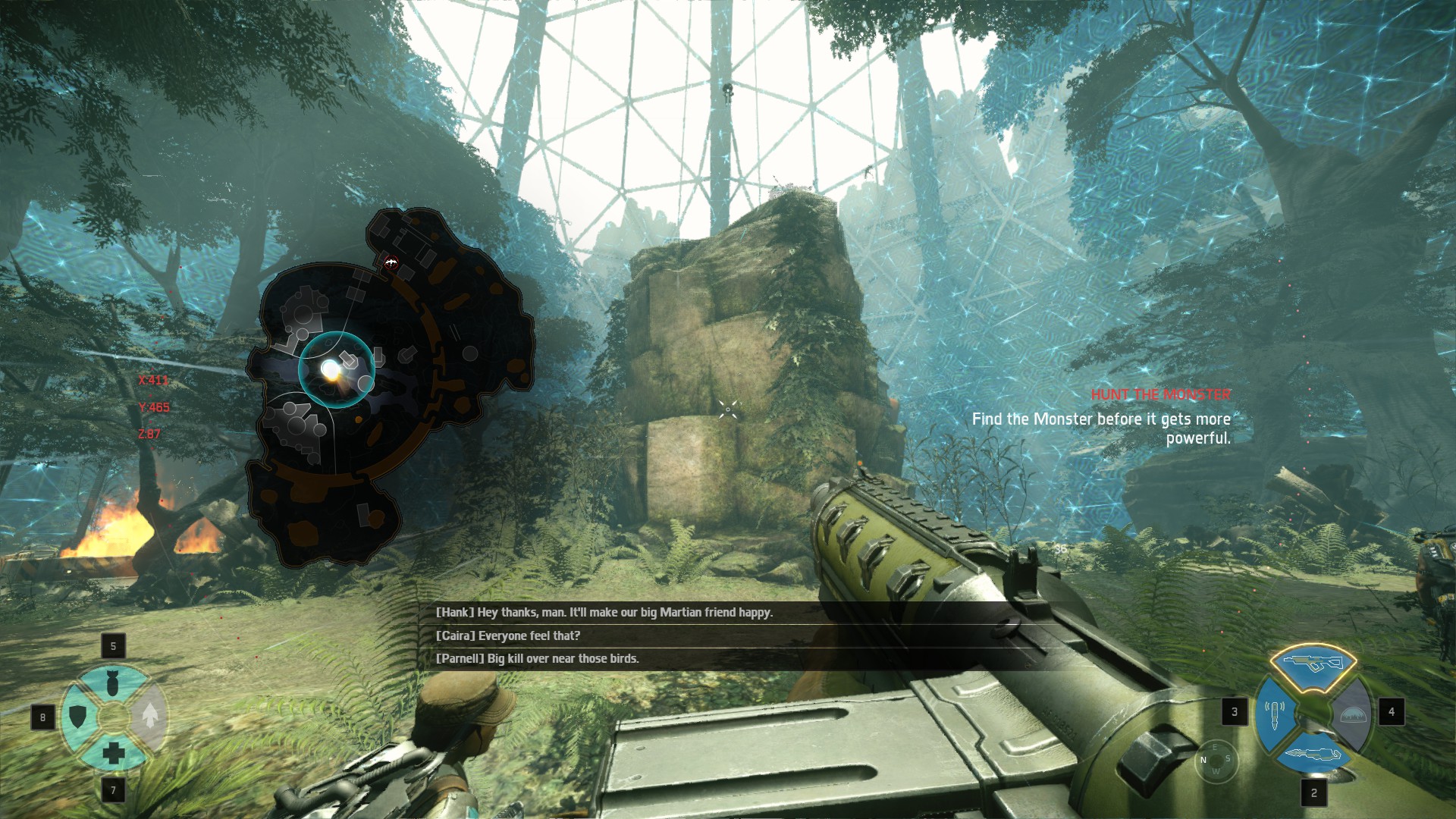
Every player (hunter and monster) has access to a top down display of the map. For hunters this will also display the position of you and your teammates. All map notifications and pings will also be displayed here.

Press or hold "Tab" to make the map UI appear. Do note that not all UI and world-space notifications can be seen when you have the map open, so open it when you need it, and then close it when you're done.


Remember we talked about pocket areas? The map is a perfect way to locate these areas. Once the monster has moved inside a pocket area, you and your team will know exactly what area it can move on where it needs to go to get out.

BIRDS

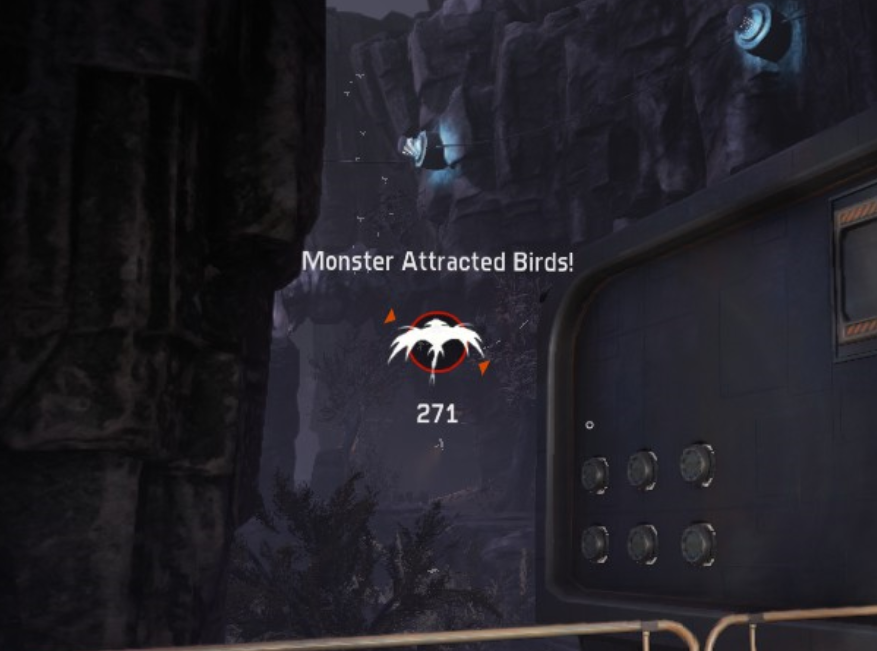
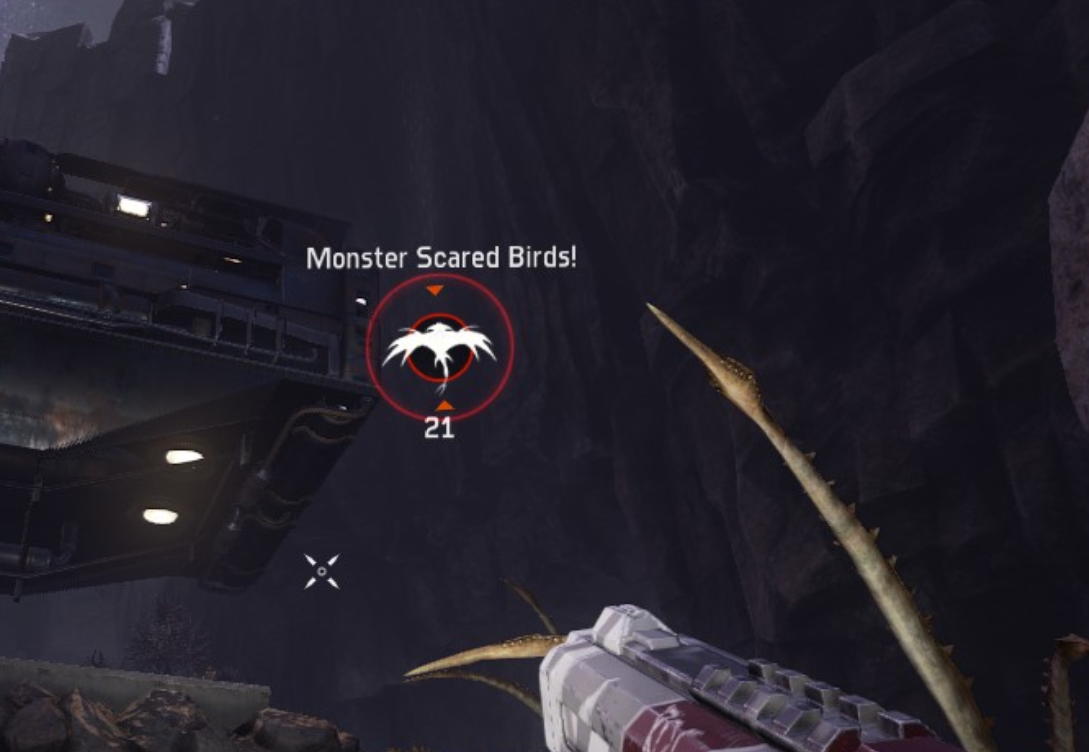
Birds are perhaps the second most common tracking tool. Once the monster has disturbed or attracted the "birds", the hunters within about 250 meters will be notified.

While the notification will only appear from a certain distance, their silhouettes can however be seen through the entire map and through geometry.

Harpies


These birds will spawn randomly every time the monster feeds. However, the chance will increase with every meal. The generally always spawn on the 7th meal.
Note that monsters get 2 free meals before Harpies can be spawned.
When looking for distant harpies, they'll often be circling above tree height, like a pack of stalking vultures.

Batray

Batrays will often linger on the ground where they will get startled once a monster moves near them. They will, however, not trigger if the monster is sneaking.

When they do get startled, this is when the hunters will receive a notification, (unless the hunters are too far away).

When looking for distant Batrays, look for a vertical line of bodies flying towards the sky.


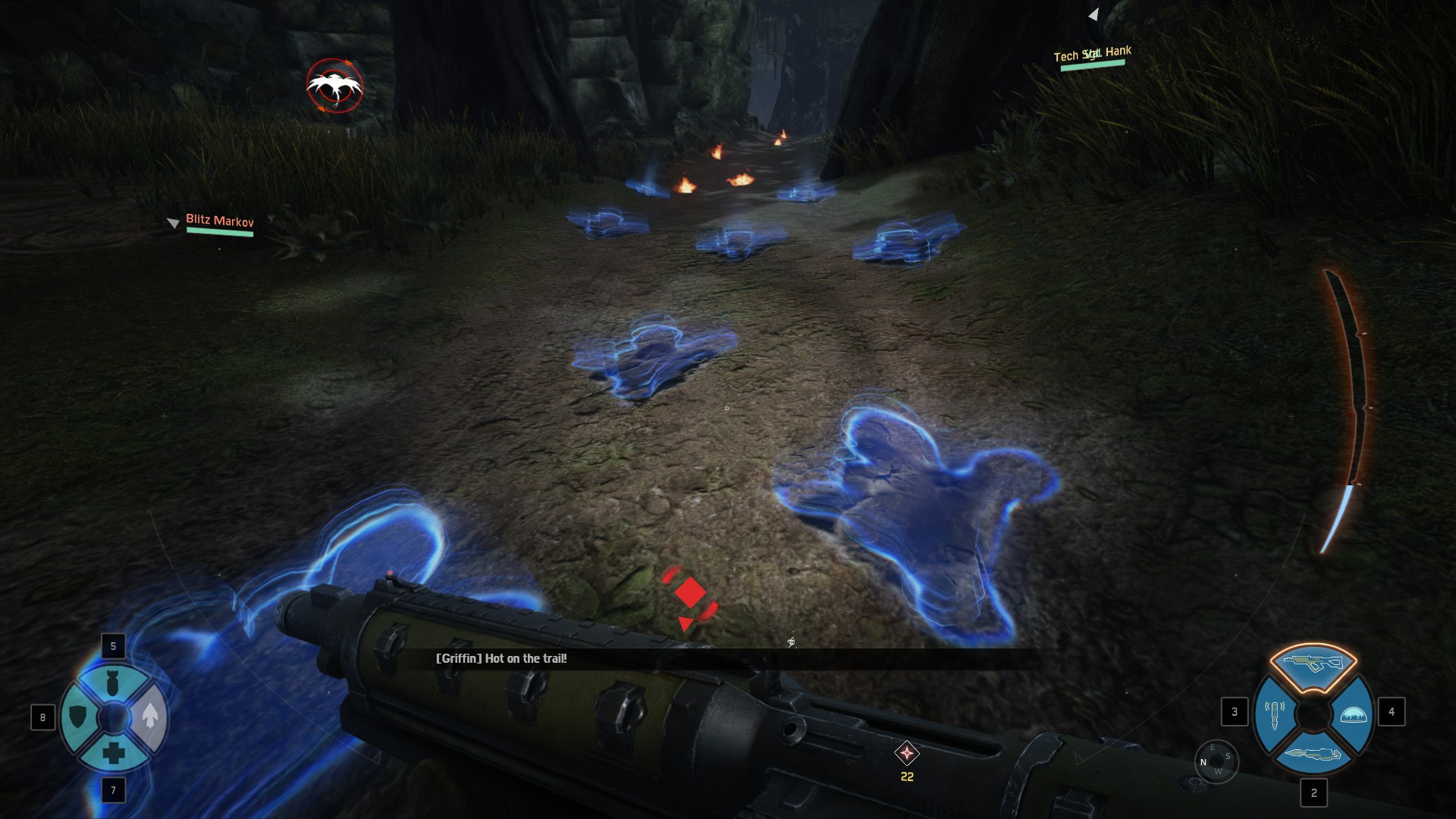
TRACKS


Tracks are probably the most obvious tracker tool that comes to mind. Be careful not stick to tracks like glue (Unless you're the Assault). Instead, try and use the tracks to predict which direction the monster is moving and then move to intersect its path.


YOUR EARS ARE YOUR EYES


A very significant tool that will help you pin-point the position of the monster is through the use of sounds. It's therefore recommended that you get a good headset.

Monster footsteps and Traversal sounds
Most monster gives off a sound when they make contact with the ground. Be it landing or taking a step. All traversals also produce a clear sound that can be heard from a distance.

Smell sound.
Whenever the monster uses smell, it gives off a sound. If you don't see the monster, but you can hear it taking a sniff, then it's likely hiding nearby and is close enough to dome.

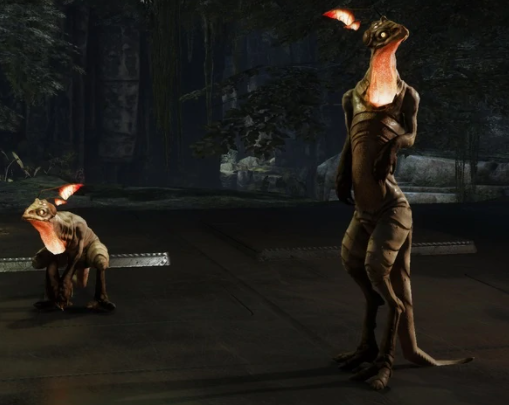
Spotters

When a spotter spots a nearby monster (within 30 meters), it'll emit a scream that can be heard from far away. Try to learn to recognize its scream, but also try and note where they usually spawn, as it will give you a more accurate idea of the monster's specific location.

Tyrant death roar

When a Tyrant dies, it will let out a death roar that can be heard from across the entire map. Like with spotters, learn to recognize its scream, as well as note its spawn locations.

[Note: I can't seem to replicate this anymore. Maybe it can only be heard from a certain distance, but it definitely needs more testing]

Caves


An important thing to note about Batrays and Harpies, is that they won't trigger in areas with a ceiling. So even if the monster has reached the 7th meal, the harpies won't be able to spawn there. If no harpies seem to spawn, it's not unlikely that the monster is roaming around inside a cave area or some other conceiled area.

Water

Monster tracks will never exist over water. So if the tracks stop near a river, it's not unlikely the monster has moved down that path.
The Dome
This section covers a lot of useful dome concepts and terminology.

God dome


A god dome is a dome that allows the hunter to traverse between the dome wall and an obstacle, without the monster being able to reach or follow them. This is so hunter favored that intentional god domes are frowned upon by most of the community, so don't go out of your way to try and land them. That said, they do happen accidentally every now and then.

Kill-dome


When you capture a monster with low or no armor, the monster finds itself in a kill-dome.

A perfect opportunity for kill-domes is when the monster engage your team without a dome. Don't throw the dome immediatly, but instead wait until the monster is about to flee, and then throw the dome.

When a monster has reached Stage 3, hunters should always aim to land a kill-dome.

Half-dome


A half dome is a dome that clips through impassable terrain, giving the monster and hunters half the space to fight on.

Generally, this favors the hunters as the monster has less space to mitigate damage.

Stealth-dome

When the support spents his/her cloak before an encounter to help move the trapper closer to the monster without it noticing, they're attempting a stealth-dome.

Dome-exit

The position of the hunters and the monster when the dome comes down is not insignificant.

The dome takes 70 seconds to recharge, which enables the Monster to cross the center of the map without risking getting caught. So generally, the Monster would want to position itself near the dome wall that faces towards the center of the map (Or the closest exit point).

10 seconds before the dome goes down, the trapper will generally announce that it's about to go down. If both parties choose the same dome exit, the hunters are able to do significant post-dome damage to the monster, as well as slow down the monster, which is especially important with rim-domes.

Rim-dome


A rim-dome is a dome that has been placed at the edge of the map. The reason it's significant enough to give it a name is that these types of domes often means that your team has to run a significant distance to catch up to the monster post-dome.

This doesn't mean that a Rim-dome is necessarily a bad thing, as it's by the rim/edge of the map that you're most likely to pull off a half-dome without causing significant loops.


THINGS TO AVOID

Loops:


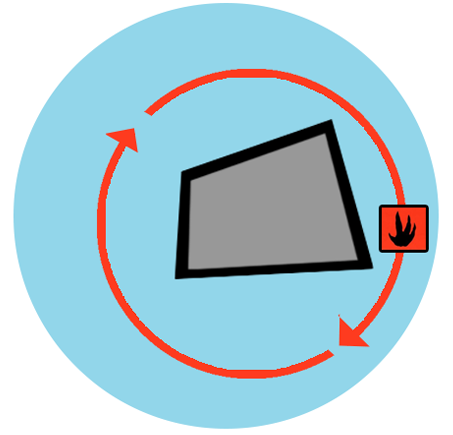
- If the monster is able to move around a large piece of impassable terrain, the dome contains a loop. Often, this is a great advantage for the monster, as it allows it to quickly block LoS to the hunters should it need to mitigate damage. Some hunters do have tools to combat this, such as Maggie's harpoon traps and Markov's mines.

Deep water:

- Areas with deep water can be troublesome as downed hunters can't revived there.
Moving across deep water also prevents you from using most of your weapons and abilities.

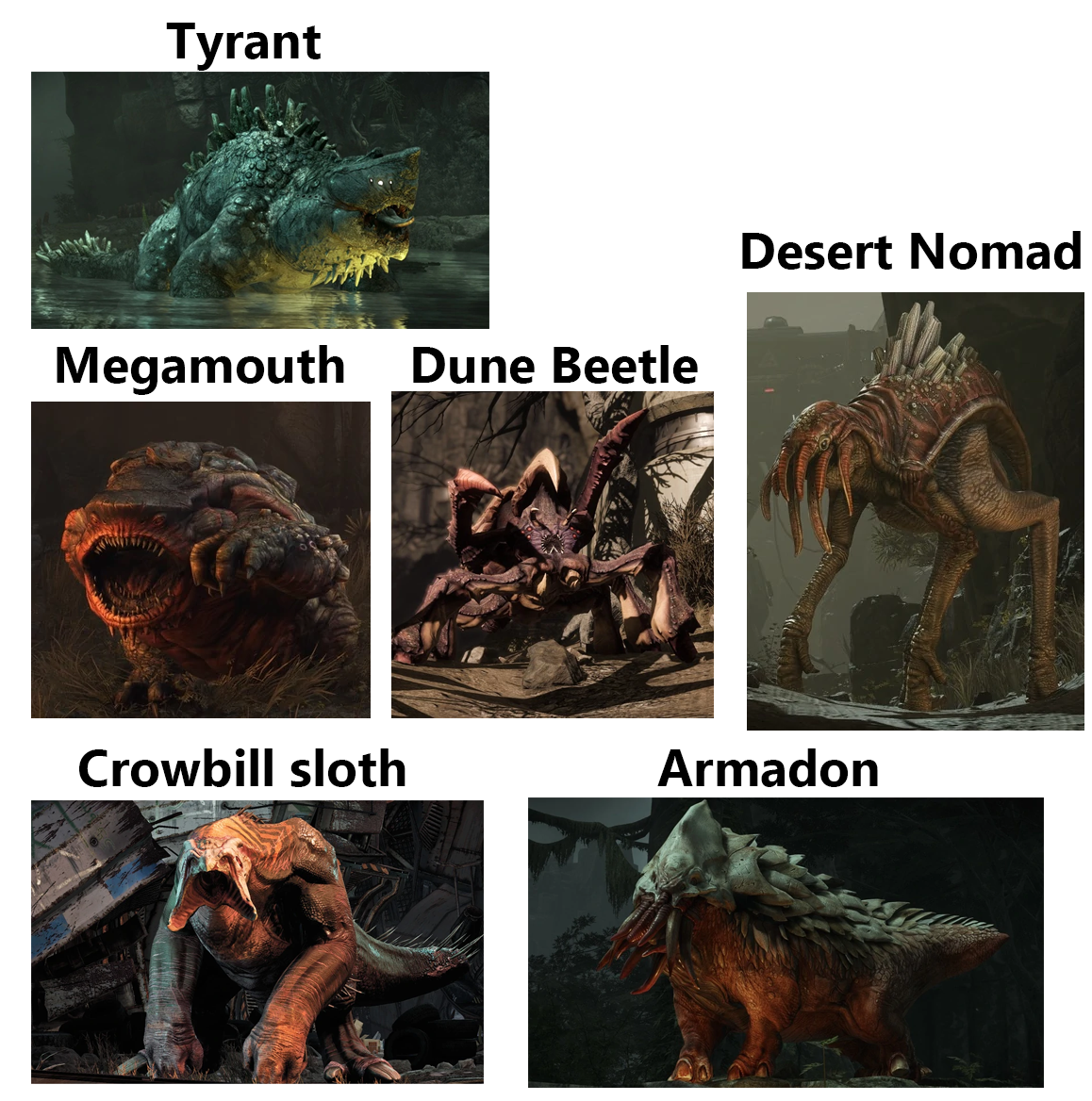
Large Wildlife:


- A dome with large Wildlife can be very troublesome as they can cause significant damage during an encounter. If you get a dome with large wildlife, it's important that the team takes it down before anything else.

Dangerous large wildlife includes:
  • Crowbill Sloth
  • Dune Beetles
  • Tyrants
  • Desert Nomad
  • Megamouth
  • Armadon
2 Comments
[AZZT]Adventure time! 15 Aug, 2022 @ 6:19am 
Is it only for legacy? Is it apply for stage 2?
Eligos 4 Aug, 2022 @ 10:27pm 
Hunting mode only works for hunters while Arena works for Monsters. The monsters are not only severely lacking in the mobility area but are severely under powered. New players will never have a good time winning as monsters and would rather stick to being hunters because of the advantage. At least predator hunting grounds got the mobility and stealth issues right and that game has lots of issues. For beginners who want to main as monsters, I recommend Arena mode. Hunting mode will make you hate the game.